
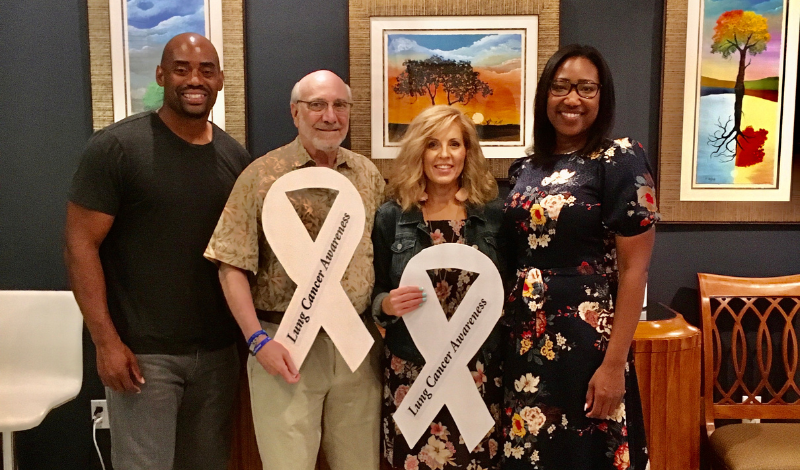
A Diagnosis That Changed Everything—And a Life Only Got Better
In 2013, when Buddy Cutler was 67 years old, he read something in a magazine that would ultimately change his life. It was an advertisement in AARP Magazine encouraging men over 50 who had ever smoked—even a little—to get screened for an abdominal aortic aneurysm. He had been a longtime smoker and fit the criteria, so he brought the ad to his primary care physician and asked for the test.
The screening revealed good news: he did not have an aneurysm.
But it also revealed something unexpected.
The scan showed a mass near the base of his liver, and doctors recommended follow-up imaging. That incidental finding would ultimately lead to a diagnosis that changed everything: Stage 4 non-small cell lung cancer.
“Get Your Affairs in Order”
Further testing revealed that the mass near his liver was actually a metastasis from lung cancer. With no actionable mutations and disease already spread beyond the lung, the diagnosis was grim.
So grim, in fact, that the doctors told him to get his affairs in order. They suspected that he might have just nine to twelve months to live.
But Buddy was having none of it. Instead, he immediately set a goal.
“I told my doctor he was wrong. I said I was going to live long enough to see my three grandchildren graduate from high school.”
That goal would become his motivation through everything that followed.
First Treatment—and a New Reality
His first line of treatment was standard of care, a three-drug chemotherapy combination. At the time, there were few, if any, alternative treatment options. After several rounds, the platinum drug was dropped, and he continued treatment for about sixteen months.
As with many drugs designed to destroy cancer cells, this cocktail was eventually outsmarted by the cancer and simply stopped working.
This was the end of 2014, and there were simply no other FDA-approved treatments available for him. Not one to take no for an answer, Buddy and his oncologist began looking at clinical trials.
Taking a Chance on Research
The first clinical trial he joined tested a combination of two experimental immunotherapy drugs. Within seven months, scans showed a remarkable 70% reduction in tumor size. But the treatment came at a price.
The side effects were severe. So severe, in fact, that Buddy developed a very serious case of colitis for which he needed to be hospitalized.
“I finally said, ‘I don’t want the drug to kill me before the cancer does’”
With his doctor’s blessing – and great disappointment – Buddy withdrew from the trial and began searching for another option.
A Second Trial—and an Extraordinary Result
Undeterred by the outcome of the first trial, in 2016, he joined a second Phase I clinical trial at his nearby NCI-designated Comprehensive Cancer Center near his home.
This study enrolled 80 participants.
Over the next several years, the experimental therapy began to work. Slowly but steadily, scans improved. By the time the trial ended in 2021, something remarkable had happened. Out of all 80 participants, only two patients experienced a complete response to the treatment.
Buddy was one of them.
Today, more than twelve years after his diagnosis, he continues to take the study drug twice a day under an extended-use agreement with the manufacturer. He has remained without disease progression ever since.
Living a Full Life
Throughout much of his treatment, Buddy continued working full-time in his accounting practice. On infusion days, he would go to the clinic early in the morning, receive treatment, and then head to the office to work for the day. Clearly, he had a great work ethic and commitment to his clients. It wasn’t until 2022 that he retired and began his second act. Retirement did a lot for Buddy, but slowing down wasn’t on the list. In fact, he might be the busiest he has ever been! Buddy volunteers weekly at the thoracic clinic at the same cancer center where he underwent treatment. He spends time in the waiting room speaking with patients and families before their appointments.
Sometimes he simply listens.
“Some people want to talk. Some people don’t…you learn to read that pretty quickly.”
He also participates in advocacy efforts, attending conferences and speaking about the importance of lung cancer research and clinical trials.
Changing the Conversation Around Lung Cancer
For many years after his diagnosis, Buddy largely processed the experience privately. But over time, he began connecting with other patients and advocates across the country.
Those connections opened a new chapter in his life.
Lung cancer advocacy has introduced him to a network of survivors, researchers, and advocates—including leaders like LCFA’s powerhouse advocate Jill Feldman, whose work has helped significantly raise awareness and push for better research funding.
“It’s a community I never expected to be part of, but it’s become incredibly important to me.”
A Goal Still in Sight
When he was first diagnosed, his goal was simple: attend his grandchildren’s graduations.
So far, he has attended two high school graduations and one college graduation. Another milestone is on the horizon: another college graduation. And more than ten years after being told he might only live a year, he is now 80 years old.
“I actually feel better than I did when I was 65!”
For him, that is the most remarkable part of all.
And it’s why he keeps showing up—for appointments, for advocacy, and for the next family milestone still to come. At 80 years old, and NED (no evidence of disease)
Buddy is acutely aware that his outcome would not have been possible without research and the clinical trials that gave him options when standard treatments ran out. That is a large part of why he continues to speak with patients, volunteer at the clinic, and advocate for lung cancer research. His story, he says, isn’t just about survival—it’s about what happens when science, perseverance, and hope intersect.
“Every new treatment starts somewhere and I’m grateful I had the chance to be part of that.”
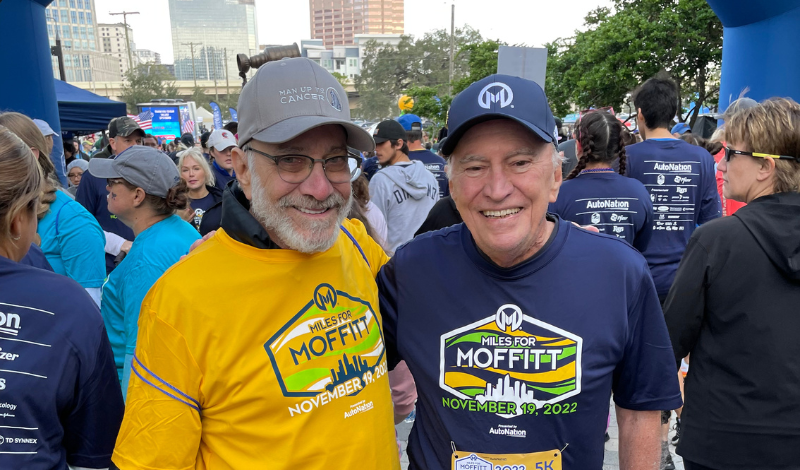
I’m using my lungs to advocate
As a member of LCFA’s Speakers Bureau, I’m advocating for research and raising awareness through the media, embodying hope and action.
View Speaker Profile