
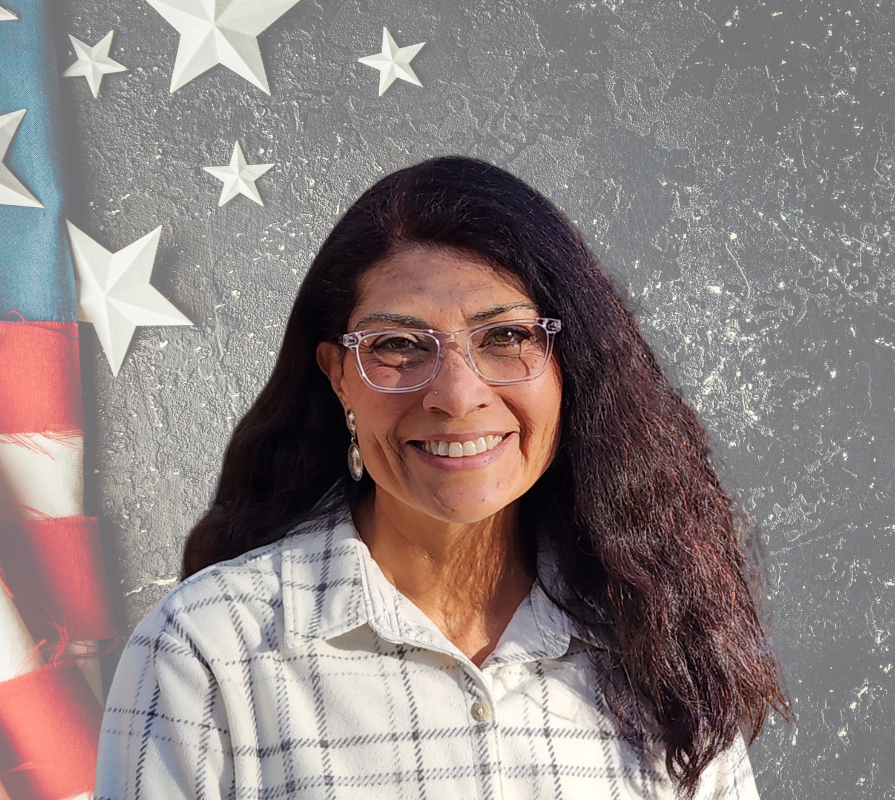
Michelle is a U.S. Army National Guard Veteran, Desert Storm survivor, and 10-year lung cancer survivor. Her journey from diagnosis to long-term survivorship is reshaping what newly diagnosed patients believe is possible.
In November 2015, at age 45, Michelle was diagnosed with stage I non-small cell lung cancer (NSCLC) after an emergency room visit for back pain. Following minimally invasive surgery, her scans were clear for more than two years. In January 2018, brain metastases were discovered. Biomarker testing revealed an EGFR mutation, opening the door to targeted therapy that has kept her cancer in check ever since.
Advocacy and Media Work
Michelle served during Desert Storm, where she was exposed to burning oil fields and toxic air. After years of advocacy and multiple VA denials, medical experts confirmed excessive carbon buildup in her lymph nodes, and the VA ultimately recognized her lung cancer as service-connected. Her experience makes her a compelling and credible voice on military toxic exposure, the PACT Act, and the barriers Veterans face in receiving proper care and recognition.
As a Voice of Hope in LCFA’s Breath of Honor program, Michelle speaks directly to the experiences of Veterans and active-duty families navigating a lung cancer diagnosis. She is especially passionate about reaching patients who feel dismissed because they don’t fit the traditional lung cancer profile—younger patients, nonsmokers, and Veterans whose exposures have gone unacknowledged.
Throughout her own journey, Michelle searched for a long-term survivor she could look up to and couldn’t find one. So she became that person—and now shares her story so others don’t have to search alone.
Key Messages
- Biomarker testing is essential and should happen at diagnosis—not after recurrence
- Military toxic exposure is a real and recognized lung cancer risk factor for Veterans
- Lung cancer is not a one-size-fits-all disease—treatment must be personalized
- Veterans and their families should know and use their PACT Act screening benefits
- Long-term survivorship is possible—and every newly diagnosed patient deserves to know that