
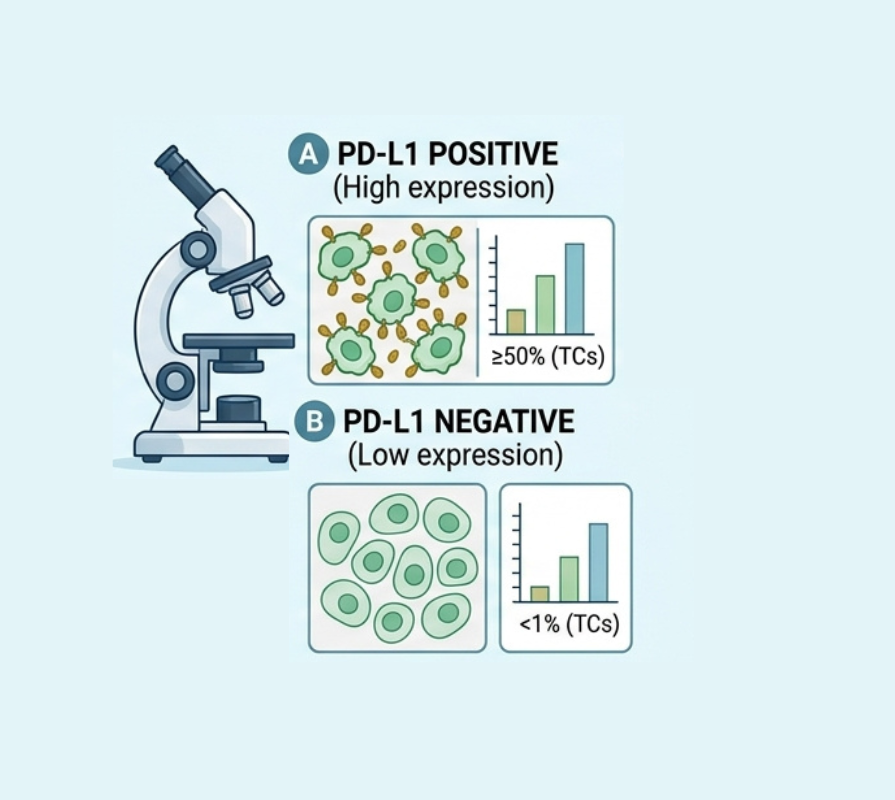
What is PD-L1 testing for lung cancer?
Think of PD-L1 as a “cloaking device” used by some cancer cells. It is a protein that sits on the surface of cells and sends a “do not shoot” signal to your immune system. When cancer cells have a lot of PD-L1, they can effectively hide from your body’s natural defenses.
The Tumor Proportion Score (TPS) Explained
When your doctor tests your tumor for PD-L1, the results are usually given as a Tumor Proportion Score (TPS). This is simply the percentage of cancer cells in your sample that “test positive” for the PD-L1 protein.
Why This Matters for Your Treatment
Knowing your PD-L1 score helps your care team decide if immunotherapy is the right “key” to unlock your immune system’s ability to find and fight the cancer. It is one piece of the puzzle, often used alongside NGS (Next-Generation Sequencing) to create a personalized treatment plan.
NOTE: Your PD-L1 status is not a “grade” or a “stage.” It is a roadmap that helps your doctors choose the most effective medicine for your specific type of lung cancer.
Frequently Asked Questions about PD-L1 Testing for Lung Cancer
No. A PD-L1 score is not a measure of how aggressive your cancer is or what stage it is. Instead, it is a “biomarker” that helps your doctors understand how the cancer behaves and which treatments (like immunotherapy) are most likely to work.
Yes, it’s possible. Biomarker levels can sometimes shift after certain treatments or as the cancer evolves. This is why doctors may sometimes request a new biopsy if the cancer returns or progresses.
A “negative” result doesn’t mean immunotherapy won’t work at all, but it may mean it isn’t the best first option. Your doctor will look at your NGS (Next-Generation Sequencing) results to see if a targeted therapy is a better fit.
Typically, PD-L1 results come back faster than broader genomic testing—usually within 2 to 7 days. Most care teams wait for both the PD-L1 and NGS results before finalizing a treatment plan.
Resources & Downloadable Guide
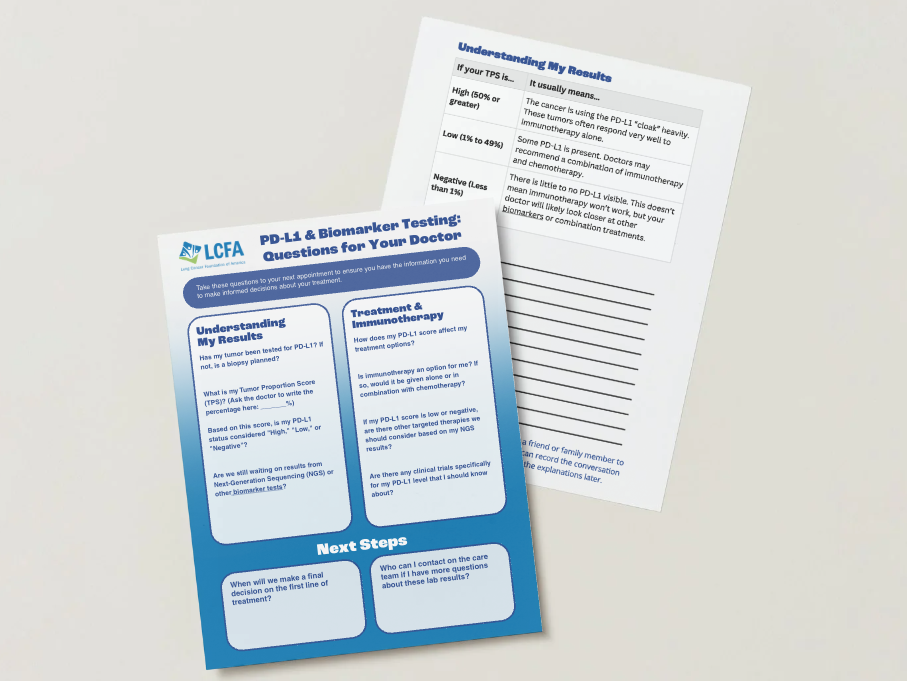
Navigating a lung cancer diagnosis is overwhelming, and remembering every detail during a brief medical appointment is difficult. We’ve created a simple, one-page guide to help you advocate for the best possible care.
Get our printable PDF, Questions to Ask Your Care Team about PD-L1