
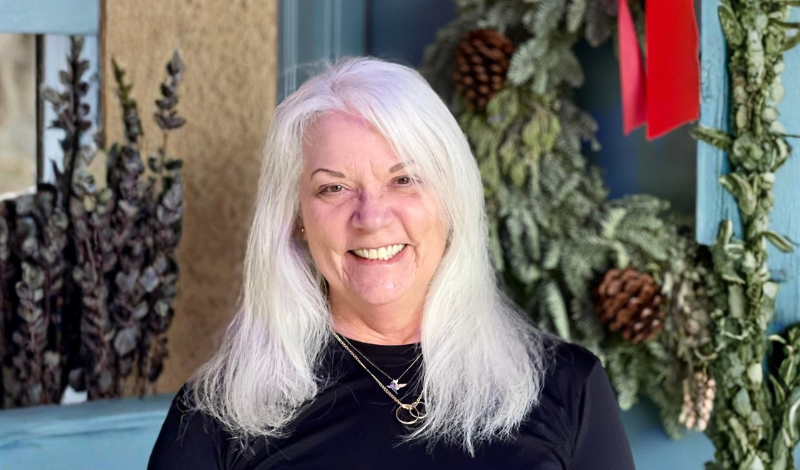
Jim Seaman spent his career serving his country as a naval aviator and test pilot. He bicycled 30 miles several times a week, lifted weights, and had never smoked a day in his life. By every outward measure, he was the picture of health. But for Veterans like Jim, military toxic exposure and lung cancer would prove to be a connection no one saw coming—until it was too late. Lung cancer was the last thing anyone expected.
But looking back, his wife Betty can now see what no one recognized at the time: the signs were there years before his diagnosis.
A Pain No One Took Seriously
Around 2011, Jim would occasionally sit on the couch, pressing his hand against the side of his chest, wincing from a sharp pain. He was in his early 50s, active, and strong. He attributed the discomfort to a muscle issue. Life moved on. The family relocated, built a house, and spent weekends building wooden boats together in their workshop. No one was terribly concerned.
Years later, imaging would reveal that the main tumor had grown almost exactly where Jim had pressed his fingers.
Symptoms That Were Easy to Explain Away
By spring 2017, Jim began slowing down. He was short of breath. He exercised less and slept more. To Betty, he still looked like the man she had always known—strong, capable, and steady. She noticed changes but told herself it was probably just aging. His primary care doctor initially blamed allergies. When that doctor went on maternity leave, a new provider stepped in—one unfamiliar with Jim’s history. Months passed. No one suspected lung cancer.
It wasn’t until Jim’s breathing became significantly worse that Betty pushed hard for answers. An X-ray led to an ER visit. A referral to an allergist followed. That allergist immediately sent Jim to a pulmonologist. Imaging finally revealed what no one had expected.
A Stage 4 Diagnosis
In October 2017, Jim was diagnosed with stage 4 adenocarcinoma—a type of non-small cell lung cancer (NSCLC), the most common form of the disease. He was 60 years old.
Jim underwent chemotherapy and radiation. Biomarker testing—a critical step that identifies specific changes in a tumor’s genetic makeup that can guide treatment—revealed a HER2 mutation. At the time, targeted treatment options for this mutation were limited. Immunotherapy was tried, but offered little benefit. His condition deteriorated quickly.
By early 2018, Jim’s coughing was relentless. Surgeons attempted to remove the tumor causing the obstruction. Instead of relief, the surgery marked a painful turning point. Jim was sent to a general cancer floor rather than the ICU, without adequate pain control. Only after Betty demanded to speak with a patient advocate was he finally given a pain pump—an intervention that should never have required a fight.
Complications followed. In April 2018, Jim could no longer walk on his own. At his final oncology appointment, the doctor pulled Betty aside. It was time for hospice.
Jim spent his last days at home, surrounded by family, friends, and love. He died on April 20, 2018—just seven months after his diagnosis. He was 61 years old.
When Grief Turned Into Questions
Two weeks after Jim’s death, Betty began connecting dots she hadn’t seen before. She learned that four of the last seven commanding officers from one naval air station had died from cancer. Another followed shortly after. Conversations with others in the military aviation community revealed a troubling pattern: too many cancers, too young, too often.
Then came the revelation about Naval Air Facility Atsugi in Japan, where the family had once been stationed. Nearby, an industrial incinerator—later shown to have been improperly operated—had released dozens of toxic chemicals, including dioxins measured at up to 90 times the safe level. The Navy eventually shut it down. But families stationed there before the mid-1990s were never formally notified.
Jim had been exposed. So had his family.
The more Betty looked, the more connections emerged. Jim had served on aircraft carriers during an era when smoking was still permitted onboard, exposing him to secondhand smoke. He worked in military aviation environments with known occupational hazards. The family had lived in base housing closest to the incinerator. Cancer touched nearly everyone in their household. One daughter developed squamous cell carcinoma as a teenager. Betty has battled recurrent bladder cancer since 2008.
None of it felt coincidental.
Turning Loss Into Action
After Jim’s death, Betty co-founded Surviving Spouse – Veterans Families for Education and Awareness, a nonprofit focused on education and advocacy around military toxic exposures—environmental, occupational, and combat-related. Her goals: notification, research, registries, and benefits for affected families.
She has worked to push for recognition of exposures like Atsugi, following the precedent set by Camp Lejeune. The fight has been slow and deeply personal—but necessary.
“This isn’t just about Jim,” Betty says. “It’s about the families. The kids. The people who never even knew they were exposed.”
A Legacy Born From Love
Jim was a naval aviator, a test pilot, and a leader. He was deeply kind, fiercely loyal, and the love of Betty’s life. They were, as she puts it, “two imperfect people who were perfect for each other.”
Even now, Betty holds onto gratitude—for the life they shared, for the time they had, and for the chance to make sure Jim’s story protects others.
“He’s still my guy, and he always will be.”
Jim’s story is a powerful reminder that lung cancer does not discriminate. Anyone with lungs can get lung cancer—regardless of smoking history, fitness level, or how carefully someone has lived. The link between military toxic exposure and lung cancer is real, significant, and too often overlooked. Environmental and occupational exposures faced by service members and their families deserve recognition, research, and action.
By sharing what happened to Jim, Betty hopes to bring visibility to the unseen risks faced by Veterans and their loved ones—and to push for earlier detection, accountability, and answers. It is a legacy born from love and loss, and a call to ensure no family is ever left in the dark again.
I’m using my lungs to advocate
As a member of LCFA’s Speakers Bureau, I’m advocating for research and raising awareness through the media, embodying hope and action.
View Speaker Profile